
As manufacturing industries continue to embrace automation, palletizing robots have become an essential component of modern production lines. From food and beverage plants to building materials, logistics, and consumer goods manufacturing, robotic palletizing systems help businesses improve productivity, reduce labor dependency, and ensure consistent pallet quality.
However, selecting the right palletizing robot is not always straightforward. Different products, production speeds, and palletizing patterns require different robotic solutions. Choosing the wrong system can lead to unnecessary costs and operational inefficiencies.
This guide explores the key factors manufacturers should consider when selecting a palletizing robot and explains how MOKA Robot can help companies achieve smarter and more flexible end-of-line automation.
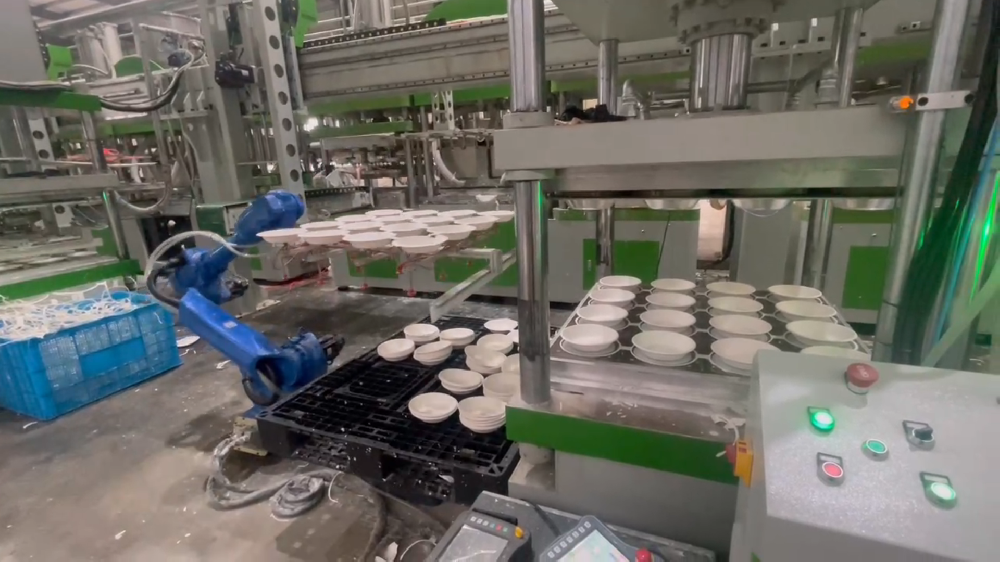
Automated palletizing has become a strategic investment for companies seeking higher efficiency and greater operational stability. Modern palletizing robots can work continuously, handle heavy loads safely, and adapt to various packaging formats. Industry-wide adoption is being driven by the need for higher throughput, improved workplace safety, and increased flexibility in production environments.
For manufacturers facing labor shortages and rising operational costs, robotic palletizing provides a reliable solution that delivers long-term productivity gains.
The first step in selecting a palletizing robot is understanding the products that will be handled.
Consider the following questions:
What is the weight of each package?
Are you palletizing cartons, bags, bottles, pails, or irregular products?
Are the products fragile or easily damaged?
What pallet patterns are required?
Different products require different grippers and robot configurations. For example, vacuum grippers are commonly used for cartons, while mechanical grippers may be better suited for bags or heavy industrial products.
Payload capacity is one of the most important selection criteria.
The robot must safely handle:
Product weight
End-of-arm tooling weight
Safety margin for future production requirements
Choosing a robot with insufficient payload capacity can limit productivity, while oversizing the system may increase investment costs unnecessarily.
MOKA Robot offers palletizing robot models designed to handle a wide range of payload requirements, providing manufacturers with flexible automation options for different industries. MOKA's portfolio includes dedicated palletizing solutions alongside a broader range of industrial robots for manufacturing automation.
A robot's working radius determines its ability to access incoming products and complete pallet stacks efficiently.
Manufacturers should evaluate:
Conveyor position
Pallet location
Maximum pallet height
Future line expansion possibilities
A robot with sufficient reach can often service multiple pallet stations, increasing system flexibility and maximizing return on investment.
Cycle time directly impacts productivity.
Before selecting a palletizing robot, calculate:
Units per minute
Cases per hour
Peak production demand
Future production growth
High-speed operations require robots with fast acceleration, optimized motion control, and advanced palletizing software.
An accurately sized robot ensures smooth production flow while avoiding bottlenecks at the end of the line.
Today's manufacturers often manage multiple SKUs and packaging formats.
A flexible palletizing solution should support:
Multiple product sizes
Different pallet patterns
Quick changeovers
Future product introductions
Modern robotic palletizing systems offer significantly greater flexibility than traditional hard automation systems, making them ideal for dynamic manufacturing environments.
A palletizing robot is only one part of the automation system.
Successful implementation requires seamless integration with:
Conveyors
Packaging equipment
Warehouse systems
Vision systems
Manufacturing execution systems (MES)
When evaluating suppliers, manufacturers should consider not only the robot itself but also the supplier's ability to provide complete automation support.
The true value of a palletizing robot extends beyond labor savings.
Additional benefits include:
Improved pallet consistency
Reduced product damage
Enhanced workplace safety
Increased production uptime
Lower operational costs
Many manufacturers achieve a rapid return on investment by replacing repetitive manual palletizing operations with automated robotic systems.
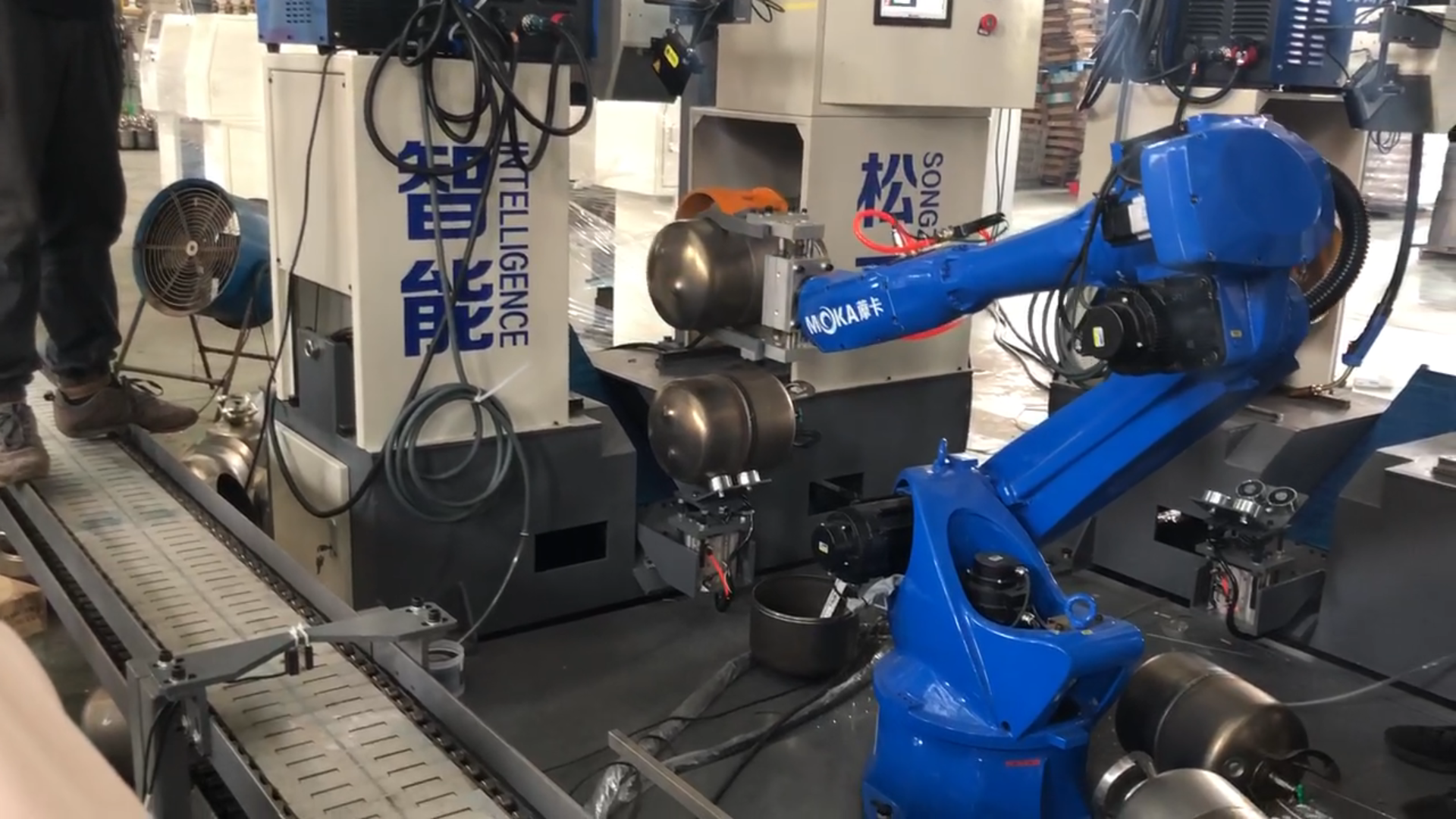
MOKA Robot specializes in the development and manufacturing of industrial robots, offering a broad range of automation solutions for modern manufacturing environments. The company provides palletizing robots designed to support efficient, reliable, and cost-effective end-of-line operations across multiple industries. MOKA has established extensive manufacturing capabilities and service networks to support customers both domestically and internationally.
Key advantages of MOKA Robot palletizing solutions include:
High-performance industrial robot platforms
Flexible payload and reach options
Reliable operation in demanding industrial environments
Cost-effective automation solutions
Professional technical support and application expertise
Customizable solutions for diverse palletizing requirements
Whether you are automating a food packaging line, warehouse operation, building materials facility, or consumer goods production plant, MOKA Robot can help you build a more efficient and competitive manufacturing operation.
Selecting the right palletizing robot requires careful evaluation of payload, reach, speed, flexibility, integration capabilities, and long-term return on investment.
By partnering with an experienced automation provider, manufacturers can implement a solution that not only meets current production demands but also supports future growth.
As industrial automation continues to evolve, MOKA Robot remains committed to helping manufacturers improve efficiency, reduce costs, and achieve smarter production through advanced robotic palletizing solutions.
